




Enterprise architecture for a coherent enterprise data layer
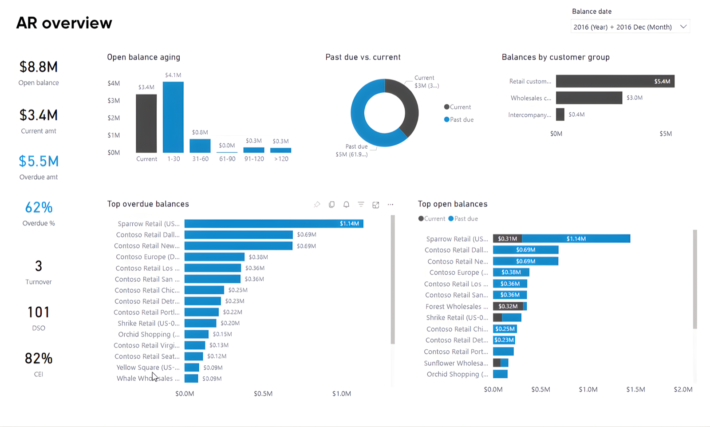
When every team builds its own data, the same question gets several answers. Veratas establishes the enterprise data architecture, ERP-aligned staging, conformed dimensional models, and a data-quality framework, that gives finance, operations, and analytics one trusted foundation to build on.
Why numbers stop agreeing
Inconsistency is rarely a data problem. It is an architecture problem.
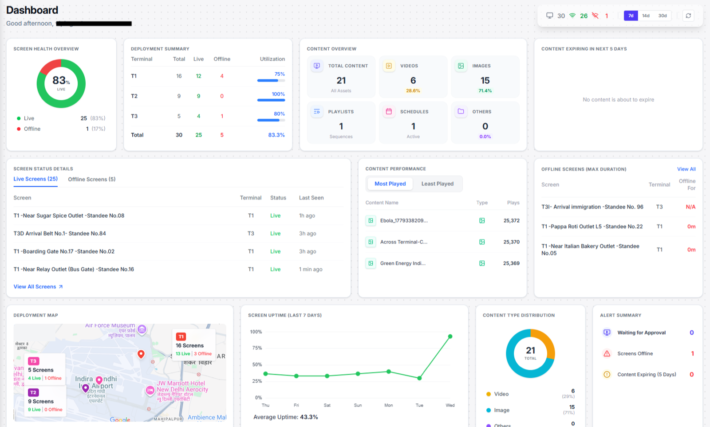
Most organisations do not set out to build conflicting data. It accumulates. Finance builds a revenue model against the general ledger, operations builds one against the order system, and a third team copies a spreadsheet that was right in 2022. Each is defensible on its own. Together they produce a board pack where three slides disagree, and a week is spent reconciling rather than deciding. The cause is not bad analysts. It is the absence of a shared definition of customer, product, period, and revenue.
Enterprise architecture fixes this at the structural level. Instead of policing reports after the fact, it defines the staging layer, the conformed dimensions, the fact models, and the quality rules once, so that every downstream warehouse, mart, and Power BI dataset inherits the same meaning. The work is not glamorous and it does not produce a demo. What it produces is the quiet result of a finance number and an operations number matching without anyone having to check.
It is also a defence against drift. Source systems change, a new ERP module goes live, an acquisition arrives with its own chart of accounts, and a team spins up a quick mart under deadline pressure. Without a reference architecture and a governance cadence, each of these events reopens the inconsistency problem. With them, new work is measured against a known target and the estate stays coherent as it grows.
An architecture review, from $7,500
A fixed-scope review of your current architecture and a target-state roadmap. You see exactly what the price covers, and a fair quote for anything more.
Fixed fee from $7,500 | 2 to 3 weeks | Price shown up front
A target-state architecture and roadmap
We review where you are and map a pragmatic path to where you want to be.
- Current-state architecture assessment
- Target-state architecture design
- Prioritised modernisation roadmap
- Risk, dependency, and cost review
- Technology and platform recommendations
- Findings readout with recommendations
Any platform or licence costs are billed separately. The $7,500 covers the assessment services.
What is in the $7,500, and what we quote separately
The implementation is scoped from the roadmap and quoted before you commit.
| In your $7,500 | Beyond the review, quoted at a fair rate |
|---|---|
| Current and target-state architecture | The implementation itself |
| Prioritised roadmap | Builds, migrations, and integrations |
| Risk and cost review | Platform deployment |
| Technology recommendations | Ongoing operations |
| Findings readout | A centre of excellence |
You pay $7,500 for the review. The implementation is scoped from the roadmap and quoted transparently, always shown before you decide.
A coherent enterprise data layer
We design the structures and standards that keep data consistent as the organisation, and the systems beneath it, keep changing.
ERP-aligned staging
A staging layer modelled on the real structures of Dynamics 365 and your enterprise ERP, ledger, dimensions, order and inventory tables. Source data lands in a stable, well-understood shape before any transformation, so downstream models are insulated from upstream change and version upgrades.
Conformed dimensional models
Conformed dimensions for customer, product, organisation, and time, plus shared fact models built on a Kimball-style approach. Finance and operations join to the same dimension keys, so their reporting reconciles by construction rather than by negotiation.
Data-quality framework
Rules, thresholds, and monitoring for completeness, validity, uniqueness, and referential integrity. Issues are detected at load time, assigned to a named owner, and tracked, so a quality problem surfaces in a dashboard, not in a board report.
Reference architectures and standards
Documented reference architectures, naming and modelling conventions, and patterns for staging, transformation, and semantic layers. New development has a blueprint to follow instead of inventing structure each time.
Architecture governance model
A lightweight governance cadence, design review, a decision log, and clear ownership, that keeps standards live as teams and systems change, without becoming a bottleneck that slows delivery.
Adoption roadmap
A subject-area-by-subject-area plan for aligning the existing estate to the target architecture, sequenced by business value and risk, so the organisation gains coherence incrementally rather than through a disruptive re-platform.
Establishing the architecture
Enterprise architecture work runs through five phases, balancing a sound target design against practical, incremental adoption.
Assess
We review current data structures, models, pipelines, and standards across systems, and document where inconsistency is causing measurable pain. The output is a clear picture of the estate and the highest-value gaps to close.
Design
We design the target enterprise data architecture: the staging layer, conformed dimensions, fact models, and the data-quality framework. This is a buildable design, validated against your real source systems, not a reference diagram.
Standardise
We document reference architectures, naming and modelling conventions, and a governance model. From this point, new work has a blueprint, so the estate stops accumulating fresh inconsistency while existing work is realigned.
Adopt
We align the existing estate to the target architecture subject area by subject area, finance first, then operations, then the rest, sequenced by value and risk. Each increment delivers coherence without a big-bang rebuild.
Govern
We run an ongoing architecture-governance cadence: design reviews, a decision log, and clear ownership. The data layer stays coherent as new systems, acquisitions, and teams arrive.
Architecture designed for adoption
An architecture only helps if the organisation actually moves to it.
Enterprise architecture has a reputation for producing impressive diagrams that nobody builds. We design the other way round. Every element of the target, the staging structures, the conformed dimensions, the quality rules, comes from teams that build data platforms on Microsoft Fabric and Azure every week, so it is checked for buildability before it is recommended. If a pattern is elegant but expensive to operate, we say so and choose the practical option.
Adoption is incremental by design. A big-bang re-platform is high risk, hard to justify, and tends to stall halfway. Instead we sequence the work by subject area, aligning finance reporting to the conformed model first because that is usually where inconsistency hurts most, then operations, then the longer tail. Each step delivers a visible result, which keeps the programme funded and credible rather than becoming a multi-year project with nothing to show.
We are also honest about scope. A smaller organisation with one ERP and one reporting team rarely needs a full enterprise architecture; a single well-modelled warehouse will serve it better and cost far less. Enterprise architecture earns its keep once there are multiple source systems, multiple teams building data, or a recurring pattern of numbers that do not agree. We will tell you which situation you are in.
FAQ
Frequently asked questions
Quick answers to questions you may have. Can't find what you're looking for? Check out our full documentation.
Establish a coherent data architecture
Stop teams getting different answers to the same question. A coherent, ERP-aligned data layer is the foundation for trusted analytics everywhere. Start with an architecture conversation.
Related reading: governance at the point of provisioning and landing zone accelerator options, and where subscription boundaries belong, and choosing an integration pattern deliberately, and choosing between Azure messaging services.
Related reading: how the operating model decides what you should be buying.
Related reading: choosing a container platform by who will operate it.