


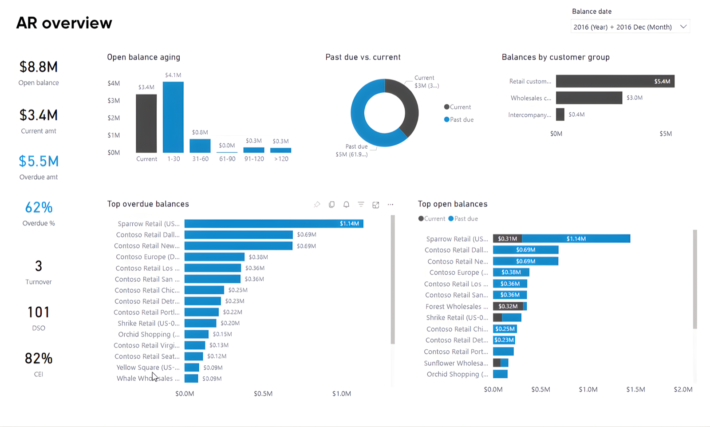
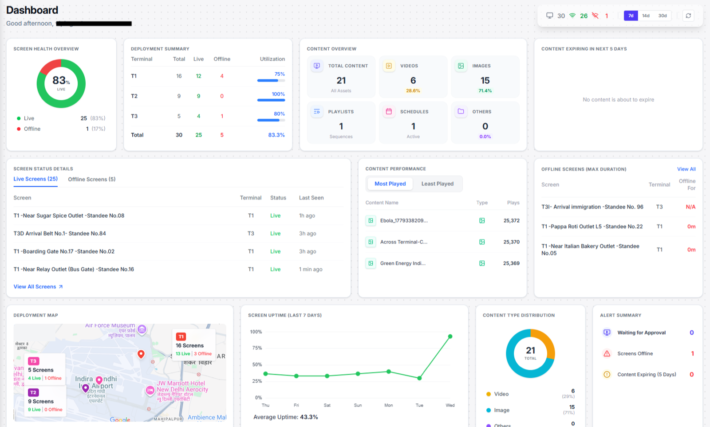


Microsoft Power Platform: apps, automation, and low-code at enterprise scale
Power Apps, Power Automate, Power Pages, and Copilot Studio let organisations build solutions fast, but at enterprise scale they need governance. Veratas delivers Power Platform solutions and the Center of Excellence that keeps them secure, supportable, and aligned to your wider Microsoft estate.
What Power Platform is, and where Dataverse fits
Power Platform is four products over a shared data layer. Understanding that layer is the key to building well.
Power Platform is Power Apps for applications, Power Automate for workflow and robotic process automation, Power Pages for external-facing sites, and Copilot Studio for custom AI agents. What ties them together is Microsoft Dataverse, a managed data service with a relational model, a security model down to row and column level, and business logic that lives with the data rather than scattered across each app. Building on Dataverse rather than on a list or a spreadsheet is what turns a quick tool into a solution that scales and can be governed.
Within Power Apps there are two app types, and the choice matters. Canvas apps give pixel-level control over layout and are built by arranging screens and writing Power Fx, the platform’s Excel-like formula language. Model-driven apps are generated from the Dataverse data model and give a consistent, data-first interface suited to complex record management. Many enterprise solutions use both, and choosing the right one per use case, rather than defaulting, is part of the design work.
A Power Platform starter app, from $6,000
A fixed-scope first app on Power Platform, bounded so the price holds. You see exactly what the price covers, and a fair quote for anything more.
Fixed fee from $6,000 | Live in 2 to 3 weeks | Price shown up front
A working first app
One canvas app your team can use, built on standard best practice.
- One canvas app, up to 5 screens
- One data source (Dataverse, SharePoint, or SQL)
- Up to 5 tables or entities
- One Power Automate flow
- Standard roles and basic branding
- Train-the-trainer and go-live
Power Platform licences are billed per user or per app through Microsoft CSP. The $6,000 covers the implementation services.
What is in the $6,000, and what we quote separately
Anything beyond the standard package is optional, and always quoted before you commit.
| In your $6,000 | Beyond the package, quoted at a fair rate |
|---|---|
| One canvas app, up to 5 screens | Model-driven apps, or more screens |
| One data source | Multiple or complex data sources |
| Up to 5 tables | Custom connectors and integrations |
| One Power Automate flow | Multi-step or error-handled automation |
| Standard roles and branding | Custom code (PCF), AI Builder, Power Pages |
You pay $6,000 for the starter app. Everything else is optional, scoped and quoted transparently at a reasonable rate, and always shown before you decide.
Full Power Platform capability
Veratas builds Power Platform solutions and the governance framework around them, so low-code stays an asset rather than sprawl.
Power Apps development
Canvas and model-driven apps on Microsoft Dataverse: line-of-business applications for forms, approvals, inspections, and case management that integrate with Dynamics 365, Microsoft 365, and external systems.
Power Automate
Cloud flows for approvals, document processing, and cross-system workflow, and desktop flows for robotic process automation against systems with no API, all built within proper connector and DLP governance.
Power Pages and Copilot Studio
External-facing portals on Power Pages with table-level security, and custom AI agents in Copilot Studio grounded in your data and secured with Microsoft Entra ID.
Center of Excellence
A Power Platform CoE built on Microsoft’s CoE Starter Kit: environment strategy, data loss prevention policies, monitoring and inventory, and a maker enablement programme.
Application lifecycle management
Solution-based ALM with managed solutions and Power Platform Pipelines, so changes are versioned, moved through environments, and never edited directly in production.
Dataverse data modelling
A relational Dataverse design, table relationships, business rules, and the row and column security model that complex line-of-business applications depend on.
From idea to governed solution
Power Platform engagements move quickly, but always with governance and lifecycle discipline built in from the start.
Scope
Use-case discovery, solution shaping, and a build-versus-configure decision, including whether canvas, model-driven, or a mix fits best. We output a fixed-price proposal with scope and acceptance criteria.
Govern
Environment strategy across development, test, and production, the Dataverse data model, data loss prevention policies that separate business and non-business connectors, and ALM with solution-based pipelines.
Build
App, flow, page, or agent development in agile sprints, with regular demonstrations and user feedback, built inside managed solutions from day one.
Adopt
User training, maker enablement for citizen developers, and a champion network, so the solution is used and the platform spreads under control rather than at random.
Operate
Monitoring through the CoE Starter Kit, ongoing enhancement, and managed support against an agreed SLA.
Why a Center of Excellence is not optional at scale
Low-code without governance does not stay low-cost. It becomes an unmanaged estate of apps nobody owns.
Power Platform’s strength, that many people can build, is also its risk. Left ungoverned, an organisation accumulates hundreds of apps and flows across uncontrolled environments, with sensitive data flowing through personal connectors and no record of who owns what. When a maker leaves, their app becomes an orphan. A Center of Excellence is the framework that prevents this. It is not bureaucracy; it is the environment strategy, the data loss prevention policies, the monitoring, and the enablement that let low-code scale safely.
Veratas deploys Microsoft’s CoE Starter Kit and tailors it to your organisation. That means an environment strategy that separates personal productivity from managed business solutions, DLP policies that classify connectors as business, non-business, or blocked so data cannot cross those boundaries, an inventory of every app and flow with its owner, and a maker enablement programme so citizen developers build to a standard. The outcome is a platform where speed and control coexist: business teams still build fast, and IT still knows the estate is secure and supportable.
Why enterprises choose Veratas for Power Platform
The difference between Power Platform as an asset and Power Platform as chaos is governance. Veratas delivers both the solutions and the control.
Governance from day one
Environment strategy, DLP policies, and a Center of Excellence, so low-code scales without security gaps, orphaned apps, or unmanaged sprawl.
Proper ALM
Solution-based application lifecycle management with managed solutions and Power Platform Pipelines: changes are versioned, tested, and promoted, never edited in production.
Integrated with your stack
Solutions built to connect cleanly with Dynamics 365, Microsoft 365, and Azure through Dataverse and a connector library of over a thousand services.
Pro-dev and low-code together
We combine citizen-developer enablement with professional development, including custom connectors, plug-ins, and code components, so each problem gets the right tool and the right builder.
Honest build advice
If a use case genuinely needs custom .NET development, or a standard Dynamics 365 module already does the job, we will say so rather than force-fit a Power App.
FAQ
Frequently asked questions
Quick answers to questions you may have. Can't find what you're looking for? Check out our full documentation.
Put Power Platform to work, safely
From a single high-value app to a governed Center of Excellence, Veratas helps you get speed from low-code without losing control. Start with a scoping conversation.
Related reading: Copilot Studio licensing and credits, and the CoE Starter Kit retirement, and where Power Platform governance actually starts, and proving what Power Platform actually returned.
Related reading: why Power Platform adoption is not a usage number.